When was the last time you visited the Special Collections Gallery on Level 4 of Marriott Library? If you haven't been up there recently, now is the time!
The current exhibit on view at the Special Collections Gallery is titled "Utah Architects and Sanborn Maps." It features the drawings of two important Utah architects, Richard Kletting (1858-1943), designer of Saltair and the Capitol Building, and Lloyd Snedaker (1905-1989), the architect for the renovation of the interior of the Capitol Building and designer of several buildings on campus.
Also on display are several examples of Sanborn Fire Insurance Maps, large scale maps ranging in date from 1867 to 1969. The maps were designed to help fire insurance agents determine the risk associated with insuring a property. Each map has information on the building materials (brick, wood, etc.), width between buildings, use of the building, location of water mains, and much more.
If you can't make it to campus to view this fantastic exhibit, visit Digital Collections online. Get started by browsing the Sanborn Maps, then try looking for photographs, images, and other primary source documents related to Richard Kletting and Lloyd Snedaker.
Thursday, June 28, 2012


Monday, June 18, 2012
Do We Have What You Need?
What are your research needs? Looking for images created by an obscure dance photographer? Stage directions for a play written by a European playwright and rarely produced in the United States? If the Fine Arts & Architecture Library does not have what you need, we want to know!
Our library supports the research interests and needs of the College of Fine Arts and the College of Architecture + Planning. This means that we want to purchase books and other materials that will facilitate your studies. Stop by the service desk in the Fine Arts & Architecture Library, fill out a 'Suggest a Purchase' form online, or e-mail Greg Hatch or Erika Church with your requests. We are happy to help, and will do everything we can to assist you with your studies!
Our library supports the research interests and needs of the College of Fine Arts and the College of Architecture + Planning. This means that we want to purchase books and other materials that will facilitate your studies. Stop by the service desk in the Fine Arts & Architecture Library, fill out a 'Suggest a Purchase' form online, or e-mail Greg Hatch or Erika Church with your requests. We are happy to help, and will do everything we can to assist you with your studies!
Tuesday, May 29, 2012
“Data are the new raw material.”
Look what’s new in the Fine Arts showcase!
The Fine Arts Collection, located here, has
new items coming in every week. This week, we added Information Graphics by Sandra Rendgen (edited by Julius Wiedemann),
published by Taschen.
The opening essays in this oversize volume explore the
history and use of charts, diagrams, and infographics, to communicate
visually the massive quantities of data usually found in reports and news
articles. Click on the examples below to see full-size images from the book, or stop by the Fine Arts Reference Desk on Level 2 to dive headfirst into "Information Graphics"!


If you like this book, you will probably enjoy the Marriott
Library guide on Information Aesthetics and other items in the
Fine Arts showcase, like the Visual Miscellaneum.
Tuesday, May 22, 2012
Feeling Manipulated by the Media?
Manipulate back! The Fine Arts & Architecture Library has many tools you can use to warp, distort, and transform your multimedia projects, including:
- A media editing station which features Final Cut Pro, and can take your old VHS tapes and turn them into DVDs, or burn Blu-ray discs
- An oversize (11" x 17") scanner so you can upload and remix your images using Photoshop
- A music composition station
- A weighted key electric piano
- A color printer
- Plus several Macs scattered throughout the Fine Arts & Architecture Library space
Friday, May 11, 2012
"Originality is nothing but judicious imitation."
Interested in architecture? Looking for inspiration? Find it at the Katherine W. Dumke Fine Arts & Architecture Library!
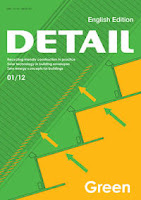
Browse our periodicals collection for design inspiration (or imitation, as the above quote by Voltaire tells us!). The Fine Arts & Architecture Library has current issues of architecture and design periodicals in our reference area and they are available for a 7-day check out.
Try these!


Thursday, September 1, 2011
Artists Hijack the Espresso Book Machine
As this article in the Deseret News attests, you can't stop artists from manipulating the world around them for their creative outlet. The Espresso Book Machine at Marriott Library is yet another example of technology and materials repurposed to create new forms of art. The recently approved Book Arts certificate at the University of Utah, lead by the Library's Book Arts Program, will greatly benefit from this relatively inexpensive publishing tool. To get your own creative juices flowing, check out the Artists Books housed in the Dumke Fine Arts & Architecture's Showcase Collection and in the Rare Books division of Special Collections.
Wednesday, November 5, 2008
Vindolanda
The ancient Romans were the dominant political, military, and cultural presence in the Mediterranean and most of western Europe for thousands of years. At the height of the Roman Empire their borders reached from Spain to Armenia and England to Egypt. Their legacy is still with us today in countless ways. One of their major contributions was to language and writing. The Romans were builders. Their road systems and city designs made communication across their vast empire easy and efficient. The ease of communication paired with widespread military education for men and domestic education for women facilitated high literacy among not only citizens but the assimilated foreigners. One of the richest examples of the Roman presence is the unearthed writing from Vindolanda, an ancient fort maintained on the British Roman border between the years 90-130 AD.
The excavations at Vindolanda in the 1970s, 80s, and 90s uncovered piles of ancient tablets, papyrus and leaf books. These fragments were written by military personnel along with their wives and slaves. They wrote about everything from simple lists to complicated military orders to social invitations and personal letters. It is apparent from these finds that writing was an important and widespread practice in ancient Rome. The variety of writing and their places of origin indicate that writing was becoming standardized and formalized throughout the empire.
The Vindolanda finds also shed light on the writing material used in the ancient world. There were some papyrus fragments but the discoveries indicate that wax tablets and leaf books were the prominent writing support and format. Wax tablets were about the size of a paperback book. Wax was spread across the wood and the writing would then be impressed into the wax with a stylus. The advantage of the wax tablets was that they could easily be reused.

The writings found at Vindolanda are not only important to understanding ancient Rome; they are important examples of the Roman influence on the development and standardization of languages and writing. Wax tablets and leaf books add an important element to the history and evolution of the look and feel of the book.
The excavations at Vindolanda in the 1970s, 80s, and 90s uncovered piles of ancient tablets, papyrus and leaf books. These fragments were written by military personnel along with their wives and slaves. They wrote about everything from simple lists to complicated military orders to social invitations and personal letters. It is apparent from these finds that writing was an important and widespread practice in ancient Rome. The variety of writing and their places of origin indicate that writing was becoming standardized and formalized throughout the empire.
The Vindolanda finds also shed light on the writing material used in the ancient world. There were some papyrus fragments but the discoveries indicate that wax tablets and leaf books were the prominent writing support and format. Wax tablets were about the size of a paperback book. Wax was spread across the wood and the writing would then be impressed into the wax with a stylus. The advantage of the wax tablets was that they could easily be reused.

Fabricated by Pamela Borrios for the Book Art Program,
Special Collections, J.Willard Marriott Library,
University of Utah
The leaf books are made of very thin slices of birch, alder, and oak. These were then folded in half and may have been sewn to other folded leaves.Special Collections, J.Willard Marriott Library,
University of Utah
The writings found at Vindolanda are not only important to understanding ancient Rome; they are important examples of the Roman influence on the development and standardization of languages and writing. Wax tablets and leaf books add an important element to the history and evolution of the look and feel of the book.
Subscribe to:
Posts (Atom)

 Posts
Posts

